Content Library The Definitive Guide to Data Exchange: Managing Structured & Unstructured Data

The Definitive Guide to Data Exchange: Managing Structured & Unstructured Data

A practical guide for securely managing structured and unstructured data across modern enterprise workflows.

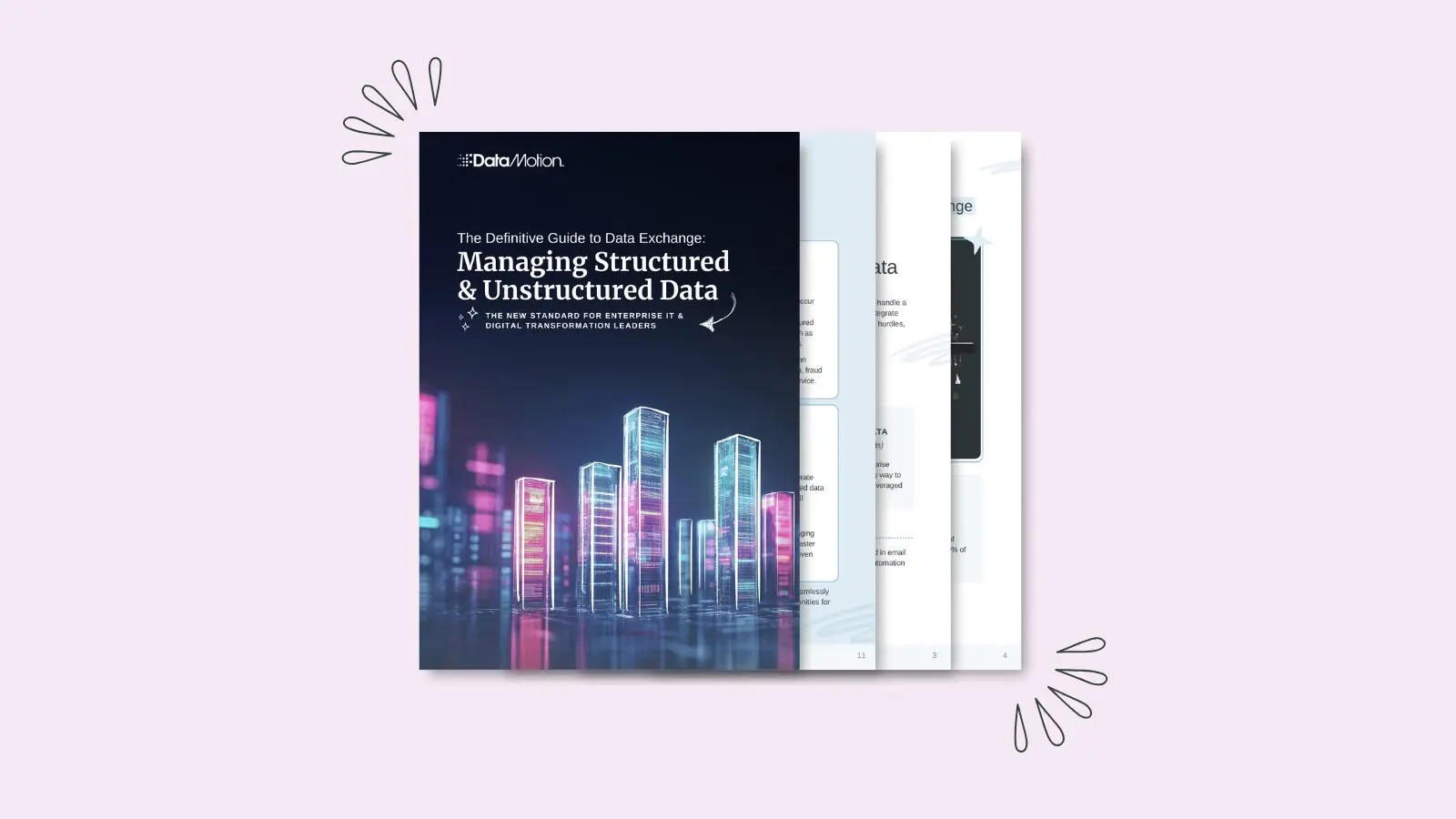
DataMotion's Definitive Guide to Data Exchange ebook cover showcasing structured and unstructured data management for enterprise and digital leaders.

Nearly 80% of data is unstructured, trapped in emails, PDFs, forms, and siloed workflows.

Legacy tools weren’t built to manage this complexity, especially in regulated industries like healthcare, financial services, and insurance.

This guide introduces a modern framework for intelligent data exchange, one that brings together structured and unstructured data, secure workflows, and AI-readiness to drive transformation forward.

Key Takeaways:

  • Why portals, secure email, and legacy tools fall short
  • How to unlock siloed data while staying compliant with HIPAA, FINRA, and GDPR
  • Core principles for building data exchange that’s discoverable, doable, and AI-ready
  • Industry-specific examples across healthcare, finance, and the public sector
  • A modern roadmap to embedding secure, scalable, structured data exchange into your existing systems

Explore More:
Frequently Asked Questions

What is the difference between structured and unstructured data in data exchange?

Structured data is organized and easily searchable, while unstructured data lives in emails, PDFs, forms, and siloed workflows. The guide notes nearly 80% of data is unstructured, and explains a modern framework for bringing both together into secure, compliant, AI-ready workflows.

How can enterprises unlock siloed data while staying compliant?

The guide outlines a modern approach to intelligent data exchange that unlocks siloed data while meeting HIPAA, FINRA, and GDPR requirements. It covers why legacy portals and secure email fall short and offers core principles for building exchange that is discoverable, doable, and AI-ready.

Why do legacy tools struggle with modern data exchange?

Legacy portals, secure email, and older tools weren’t built to manage today’s complexity, especially the roughly 80% of data that is unstructured, and especially in regulated industries. The guide explains their shortfalls and provides a roadmap to embed secure, scalable, structured data exchange into existing systems.