
How Email Encryption Works
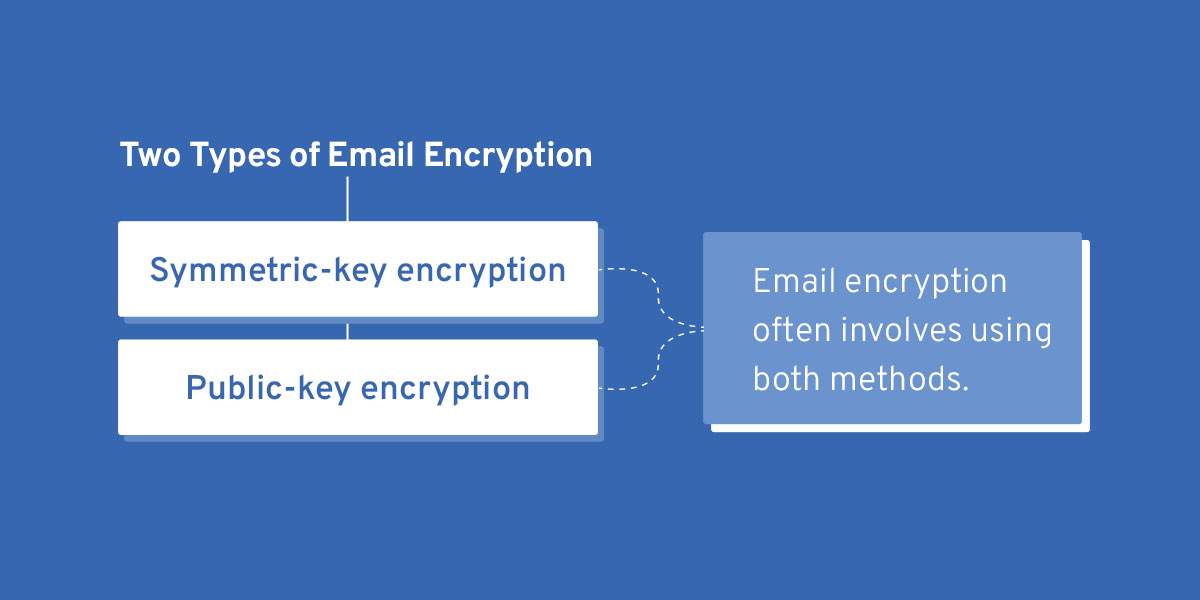
- Symmetric-key encryption: In this method, the same key is used to encrypt and decrypt the message.
- Public-key encryption: This approach uses both a public and a private key. The public key is transparent, and the private key is kept secret. The public key encrypts the message, while the private key decrypts the message.
The Transformation of Email Encryption
How Has Email Encryption Been Used as a Feature?
Email Encryption, CRM, Contact Centers and Mobile Apps
Enter Email Encryption as a Service
Benefits of Choosing an Email Encryption API
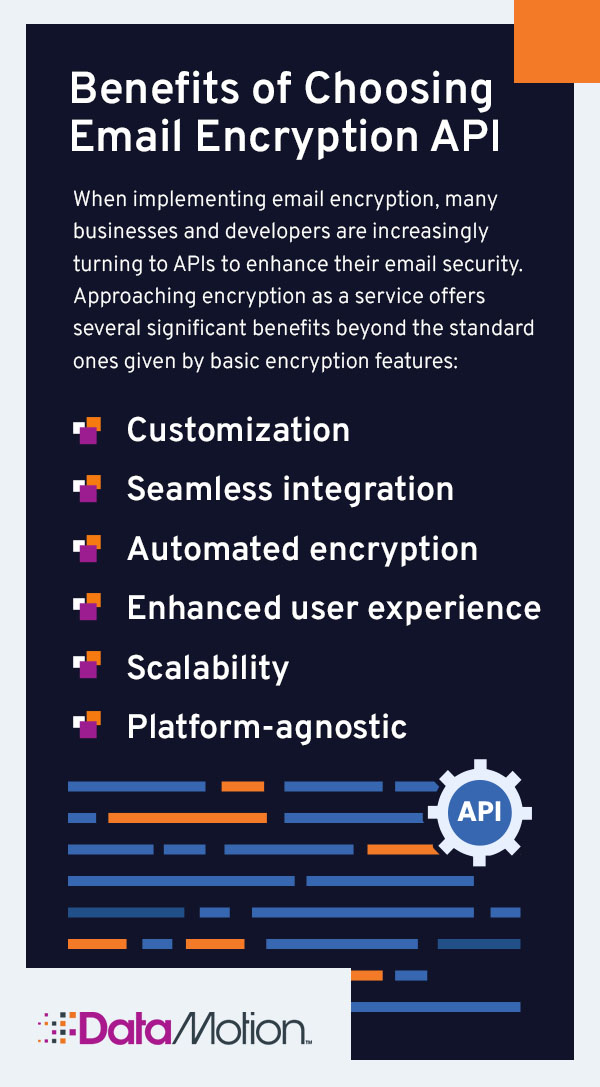
- Customization: Email encryption APIs provide the flexibility to tailor encryption solutions to specific needs. This customization is invaluable for businesses with unique security requirements or those operating in regulated industries. API integration allows you to create encryption protocols that align with specific compliance standards, providing peace of mind for senders and recipients.
- Seamless integration: APIs are designed to seamlessly integrate with existing email systems, making the adoption process straightforward and minimally disruptive. This means organizations don’t have to undergo significant overhauls of their current email infrastructure to complement robust encryption. This transition is smoother, reducing the learning curve for employees and minimizing potential workflow disruptions.
- Automated encryption: APIs can automate the encryption and decryption process, reducing the risk of human error. Automation is particularly valuable in high-volume environments where manual encryption could be time-consuming and error-prone. Automation ensures all outgoing emails containing sensitive information are consistently protected.
- Enhanced user experience: Email encryption APIs provide a more user-friendly experience. Recipients don’t need to install additional software or use separate decryption tools. This enhances the overall communication experience, fostering trust and cooperation among users who expect their sensitive information to be protected effortlessly.
- Scalability: As businesses grow, their email encryption needs may evolve. APIs offer scalability, allowing organizations to adapt to changing requirements. This means companies can easily accommodate increased email traffic and ensure that encryption remains a robust and effective security measure.
- Platform-agnostic: Email encryption APIs are platform-agnostic and can work with various email providers. This provides enhanced control with specialized encryption services.
Email Encryption APIs for Mid-Market Solution Providers
What to Look for in an Email Encryption API
- Robust encryption algorithms: Ensure the API supports strong encryption algorithms, like AES and RSA, to provide comprehensive protection for email content.
- Ease of integration: Look for an API that is easy to integrate with your existing email system or application. It should offer clear documentation and support for various programming languages.
- Automated key management: Effective key management is essential. The API should provide tools for generating, storing and securely managing encryption keys. The ability to rotate keys regularly is also vital for long-term security.
- End-to-end encryption: The API should support end-to-end encryption, ensuring email content remains encrypted from the sender to the recipient, with decryption only happening at the recipient’s end.
- Compliance and certifications: Check if the API complies with industry regulations and standards. Look for certifications and audits that demonstrate its commitment to security and compliance.
- User-friendly experience: A user-friendly API is crucial, especially for email encryption in customer-facing applications. Consider features like a simple user interface, support for mobile devices and user-friendly error handling.
- Customization and scalability: You want the ability to customize encryption settings, key lengths and other security parameters. Additionally, ensure the API can handle your organization’s email volume, both current and future. It should be scalable to accommodate growth without sacrificing performance.
- Reporting and monitoring: Look into features that provide insights into email encryption activity, like message tracking, audit logs and reporting tools, to monitor the encryption’s effectiveness.
- Cross-platform compatibility: The API should be compatible with various email clients, platforms and operating systems to ensure seamless communication across a wide range of devices and applications.