

Transport Layer Security (TLS) encryption is a standard part of enterprise email security, and for good reason. It protects messages as they travel between servers, is widely supported and is relatively easy to deploy.
However, for organizations in regulated industries, TLS tends to raise more questions than it answers once you start looking at what it actually covers and what it leaves exposed. Below, we unveil email vulnerabilities and consider whether TLS email encryption is the complete answer for your company’s needs.
What Is TLS Encryption, and Where Does It Fall Short?
TLS encrypts email data while it’s moving between mail servers. You can think of it as a secure tunnel where messages that travel through it are protected from interception during delivery.
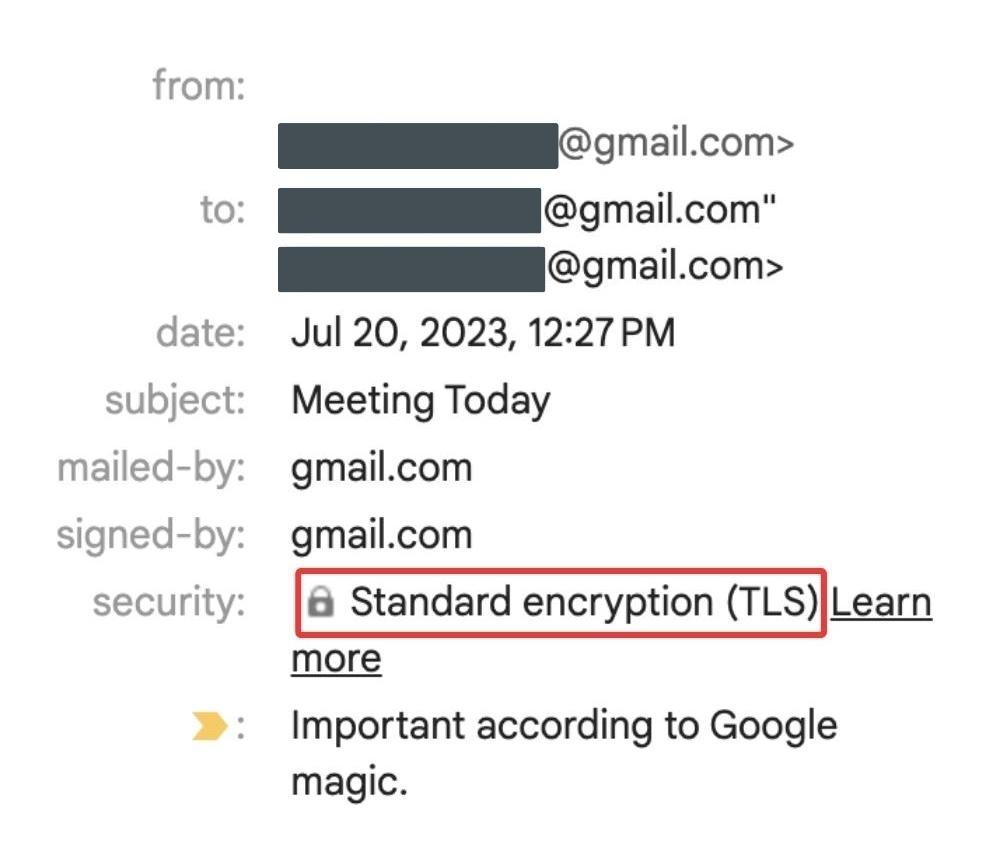
The limitation is in how TLS actually behaves in practice. Most deployments use what’s called “opportunistic TLS,” which means the system will encrypt the connection when the receiving server supports it, but will fall back to unencrypted transmission if it doesn’t. That fallback often happens silently, with no alert to the sender or recipient.
TLS also only protects data in transit. Once a message reaches its destination server, that protection ends. For industries with strict data retention and access requirements, that gap matters.
TLS vs. Other Enterprise Email Encryption Options
TLS works best as one layer in a broader security strategy, not as the whole foundation. Enterprises in regulated industries often combine it with other approaches to address what TLS alone can’t.
What Are the Best Email Encryption Options for Enterprises?
The best email encryption option depends on your environment, your compliance requirements and how your teams work. Here are the most popular options worth understanding:
- DataMotion: DataMotion is purpose-built for secure data exchange. It unifies encryption, secure messaging and file exchange into a single API-first platform that integrates with the systems your teams already use.
- Microsoft Purview: Organizations running Microsoft 365 have access to built-in message encryption and rights management through Purview. It handles much of the certificate complexity behind the scenes, though it’s a feature within a larger ecosystem rather than a dedicated encryption solution.
- Google Workspace: For Google-native environments, Workspace includes client-side encryption options that keep data unreadable to Google’s infrastructure. It works well within its own ecosystem but wasn’t designed to serve as a stand-alone enterprise encryption strategy.
What Regulated Industries Actually Need
For IT leaders and compliance officers in healthcare, financial services and the public sector, security needs to work consistently across every communication channel and fit into existing systems
Compliance frameworks like HIPAA require audit trails, access controls, data retention policies and the ability to demonstrate compliance at any point. A secure email solution should support all of that.
Go Beyond Encryption With DataMotion
The DataMotion platform is built on the principle that security should be invisible to users while remaining fully transparent to the teams responsible for compliance. Rather than adding another point solution to an already fragmented stack, DataMotion brings secure email, encrypted file exchange, secure messaging and forms processing together in one API-first platform. Contact our team today to schedule a personalized demo.
Frequently Asked Questions
What is TLS email encryption?
TLS (Transport Layer Security) encrypts email while it travels between mail servers, protecting it from being read in transit. It works automatically when both servers support it.
What are the limits of TLS for email security?
TLS only protects messages in transit, and only when both servers support it. It does not encrypt messages while they are stored, does not guarantee the recipient’s server is secure, and does not verify recipient identity.
Is TLS enough to protect sensitive or regulated data?
Often it is not. For health, financial, or other regulated information, TLS alone can leave gaps, since it does not protect data at rest or guarantee end-to-end protection.
What provides stronger protection than TLS alone?
Secure messaging that encrypts data both in transit and at rest, controls access through authentication, and delivers messages through a protected portal provides stronger, more consistent protection.
How does DataMotion go beyond TLS?
DataMotion encrypts messages in transit and at rest and delivers them through a secure, authenticated channel, so sensitive information stays protected even when standard email and TLS fall short.